
The Hidden Cost of Copy/Paste Ops in Service Businesses
Manual handoffs between email, calendars, CRM, and accounting silently drain time, delay invoices, and hurt retention. Measure “admin drag” and fix it fast.
Copy/Paste Operations: The Compounding Costs You Don’t See on the P&L

In many service-business teams, the workday is held together by copy/paste: details move from an email to a calendar invite, then into a CRM note, then into accounting for invoicing. Each handoff seems small—until you multiply it by every booking, reschedule, and follow-up. The result is hidden operations cost: fragmented context, inconsistent customer communication, and an office manager stuck babysitting systems instead of running the business.
The compounding effect shows up in predictable places. Late or inaccurate invoices slow cash-flow and create awkward customer conversations. Missed follow-ups (or duplicated ones) reduce trust and increase churn. Rework becomes the norm: correcting names, dates, line items, and statuses across tools. Over time, the process becomes “who remembers to do it,” which caps productivity and makes growth feel like adding headcount, not leverage.
Calculate “Admin Drag” in 10 Minutes (and Why It Hits Cash Flow First)
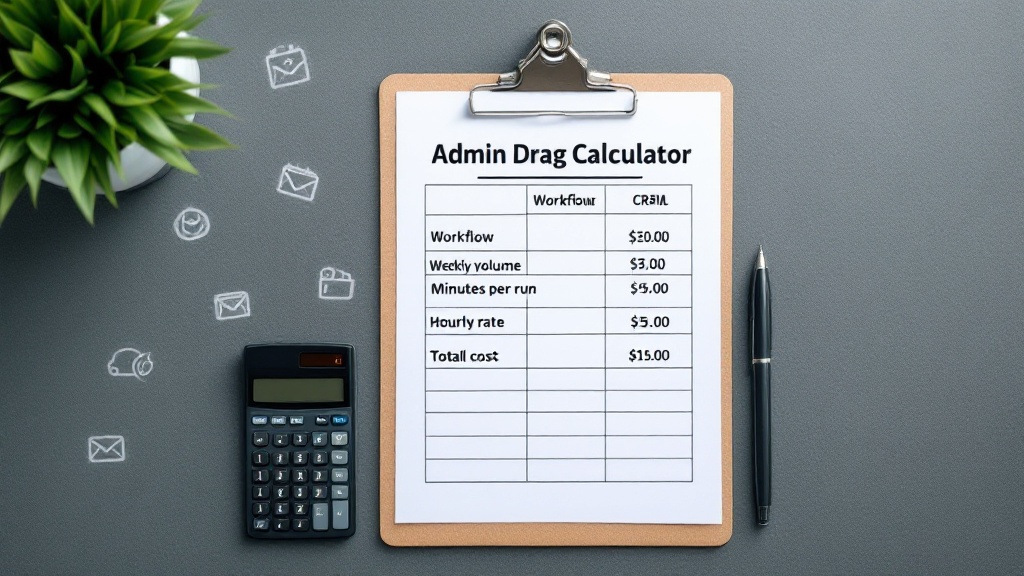
To make the problem actionable, calculate your “admin drag”—the weekly cost of manual work caused by disconnected tools. List your top 5 recurring workflows (e.g., “book appointment → reminders → invoice → payment nudges”). For each, estimate: (1) how many times it happens per week, (2) minutes of manual handling across systems, and (3) your blended hourly rate (owner time counts). Formula: Admin Drag = weekly volume × minutes per run ÷ 60 × hourly rate. Add a line for “error tax” (time spent fixing mistakes) and “delay tax” (days to invoice × average invoice value × rough cost of capital).
You’ll usually find the biggest cash leak isn’t marketing—it’s lag. If invoices go out two days later because someone had to reconcile email threads with calendar notes, your cash-flow slows immediately. In a service-business, tightening these operational loops is often the fastest productivity win without hiring, because you’re removing repeated decisions and manual data movement from the process.
Spot the 3–5 Highest-Leverage Fixes (Without Hiring)
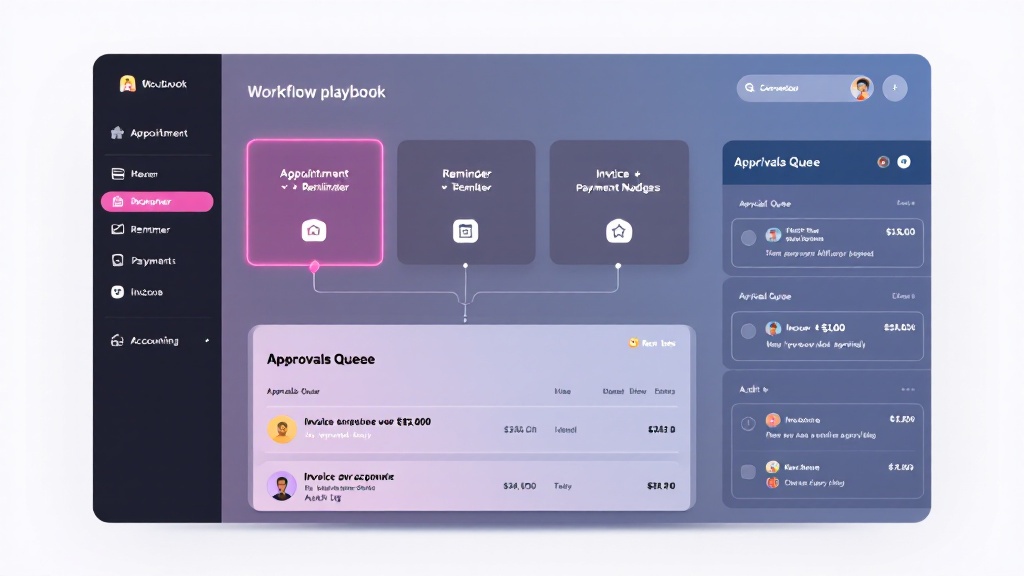
Once you see admin drag in dollars, prioritize fixes that remove whole steps, not just speed them up. Look for workflows with (a) frequent repetition, (b) high error risk, or (c) direct cash-flow impact. Typical high-leverage targets: appointment reminders tied to bookings, invoice creation triggered by completed work, payment follow-ups on a schedule, and CRM updates that happen automatically when emails or meetings occur. These are core operations building blocks that reduce “did we remember?” dependence.
The key is orchestration across tools with sensible human control. A playbook-driven approach—like OpsPlaybook Hub—lets non-technical teams set a goal, answer prompts, and enforce business rules (templates, thresholds, approvals). Event-driven automations run the standard path, while exceptions (like invoices over $2,000) go into an approvals queue with audit logs. You keep judgment where it matters and automate the rest. For most service-business owners, that’s the fastest path to cleaner process, higher productivity, and more consistent customer follow-through.